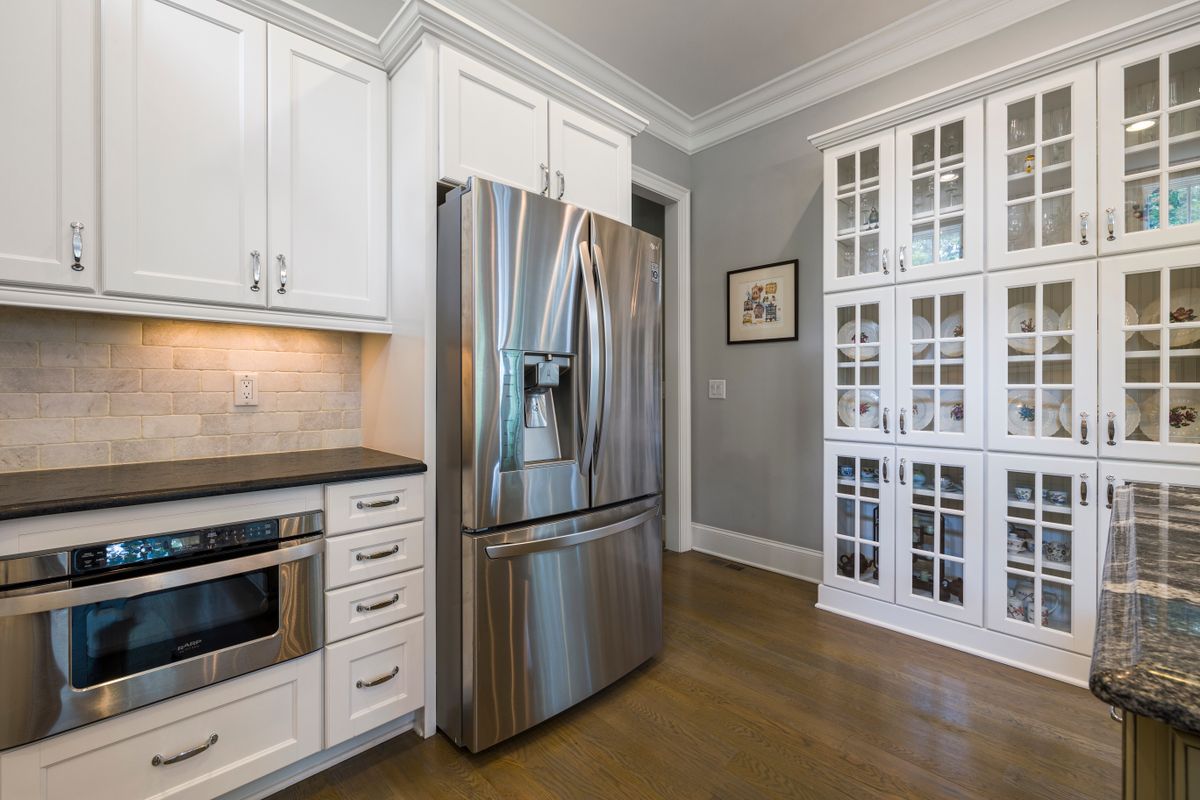
"Remodel your kitchen before you sell" is one of the most repeated pieces of real estate advice — and like most advice repeated that often, it's only true some of the time. The honest answer depends heavily on the scope of the remodel, and the actual data on resale returns tells a more nuanced story than the blanket advice suggests.
The source: Zonda's Cost vs. Value Report
The most widely cited data on remodeling ROI in the US comes from what's now called Zonda's Cost vs. Value Report — the successor to the long-running Remodeling Magazine Cost vs. Value series. Each year, it estimates the average cost of dozens of remodeling projects nationally and compares that to the average value they add at resale, expressed as a percentage of cost recouped.
The report has consistently found a striking gap between "minor" and "major" kitchen remodels, and understanding that gap is the key to answering whether a remodel is worth doing before you sell.
| Remodel scope | What it typically includes | Approx. resale ROI (national) |
|---|---|---|
| Minor kitchen remodel | Cabinet refacing, new countertops, new appliances, backsplash refresh — same layout | Roughly 90-115% |
| Major / upscale kitchen remodel | Full gut renovation, custom cabinetry, layout change, premium finishes | Roughly 30-45% |
In plain terms: a smaller, targeted kitchen refresh has historically recouped close to — or in some years, more than — its full cost at resale nationally, while a large, high-end gut renovation typically recoups well under half of what was spent, even though it may produce a nicer kitchen to actually live in.
Why the gap is so large
A few dynamics explain this. First, most buyers are comparing your home to others in a similar price range, and a clean, updated, functional kitchen clears that bar without needing to be a showpiece. Second, very high-end finishes (professional-grade ranges, exotic stone, extensive custom cabinetry) are somewhat subjective in appeal — a buyer who doesn't cook seriously may not value a professional range the way you do. Third, a full gut renovation costs disproportionately more than a minor refresh, but doesn't add a proportionally larger amount of resale value, because most buyers have a ceiling on what a kitchen alone will move their offer.
So what should you actually do before selling?
- If your kitchen is dated but functional: a cosmetic refresh — paint or reface cabinets, update hardware and lighting, a new countertop if the existing one is visibly worn — is usually the financially smart move.
- If your kitchen has real functional problems: (broken appliances, failing countertops, non-working fixtures) fixing those specific issues matters more than a stylistic overhaul.
- If you're already planning a full remodel for your own enjoyment, not primarily for resale: go ahead, but budget for it as a lifestyle investment rather than expecting to recoup the full cost when you eventually sell.
- Always sanity-check against your local market: national averages can differ meaningfully by region and price tier — a real estate agent familiar with recent comparable sales in your specific neighborhood is the best resource for that local read.
A word on regional variation
National ROI averages compress a lot of local variation. Coastal and high-cost metro markets have, in various years of the Cost vs. Value data, shown kitchen ROI figures both above and below the national average, depending on local buyer demand and remodeling costs in that specific market. Treat the national figures above as a starting point for your thinking, not a guarantee for your specific address.
How "ROI" is actually measured here
It's worth understanding the mechanics behind these percentages, because "ROI" in a remodeling context means something slightly different than in an investment context. Zonda's methodology surveys remodeling contractors nationally for typical project costs, and separately surveys real estate agents for their estimate of how much value each completed project would add to a home's resale price in that same market. The ROI percentage is simply the estimated added value divided by the project cost. It's an informed estimate rather than a measurement of actual, realized sale prices for that exact renovated home — which is the best data available at a national scale, but it's still an estimate, not a guarantee for any single property.
Smaller updates that can move the needle without a full remodel
If a full kitchen remodel — minor or major — isn't in the budget or timeline before you sell, several lower-cost updates are commonly recommended by real estate agents to make a dated kitchen show better without the cost or disruption of a renovation:
- Repaint cabinets and walls in a neutral, broadly appealing color.
- Replace cabinet hardware — an inexpensive swap that reads as an intentional style update.
- Update light fixtures, including under-cabinet lighting, which meaningfully affects how a kitchen photographs and shows in person.
- Deep clean or replace grout and caulk, which disproportionately affects how "maintained" a kitchen feels to a walkthrough buyer.
- Replace a worn faucet — a small, visible fixture that's disproportionately noticed.
None of these show up as their own line in the Cost vs. Value Report, but they're broadly consistent with the report's core finding: smaller, targeted, cosmetic-level updates tend to be efficient uses of a pre-sale budget compared to large structural changes.
When a remodel genuinely isn't worth it before selling
There are situations where spending anything on the kitchen before listing doesn't make sense: if your local market is strongly favoring sellers already, if comparable homes nearby haven't been renovated either, or if you're selling "as-is" to a buyer pool (such as investors) that's pricing in renovation themselves regardless of your kitchen's condition. A conversation with a local real estate agent about how your specific home compares to current, active competing listings is more useful than a national statistic in these edge cases.
Estimate the cost side of the equation
Before deciding what to spend, see what a cosmetic refresh vs. a full remodel would actually cost for your kitchen.
Try the Kitchen Remodel CalculatorThe takeaway isn't "never remodel before selling" — it's "match the scope of the remodel to what the market will actually pay back for." A well-executed minor refresh is, according to the industry's own resale data, usually the better financial bet. The same logic holds for bathrooms, where the gap between a mid-range and an upscale remodel's resale return is just as wide — see our bathroom remodel cost breakdown for the full numbers.
Bottom line
The evidence points to a fairly clear pattern: scope your pre-sale kitchen spending to what buyers in your market actually pay back for, not to what would make the kitchen perfect by your own taste. That usually means a well-executed minor refresh rather than a full high-end gut renovation. If you're on the fence, a short conversation with a local real estate agent about current comparable listings is worth more than any national statistic, including the ones in this article.