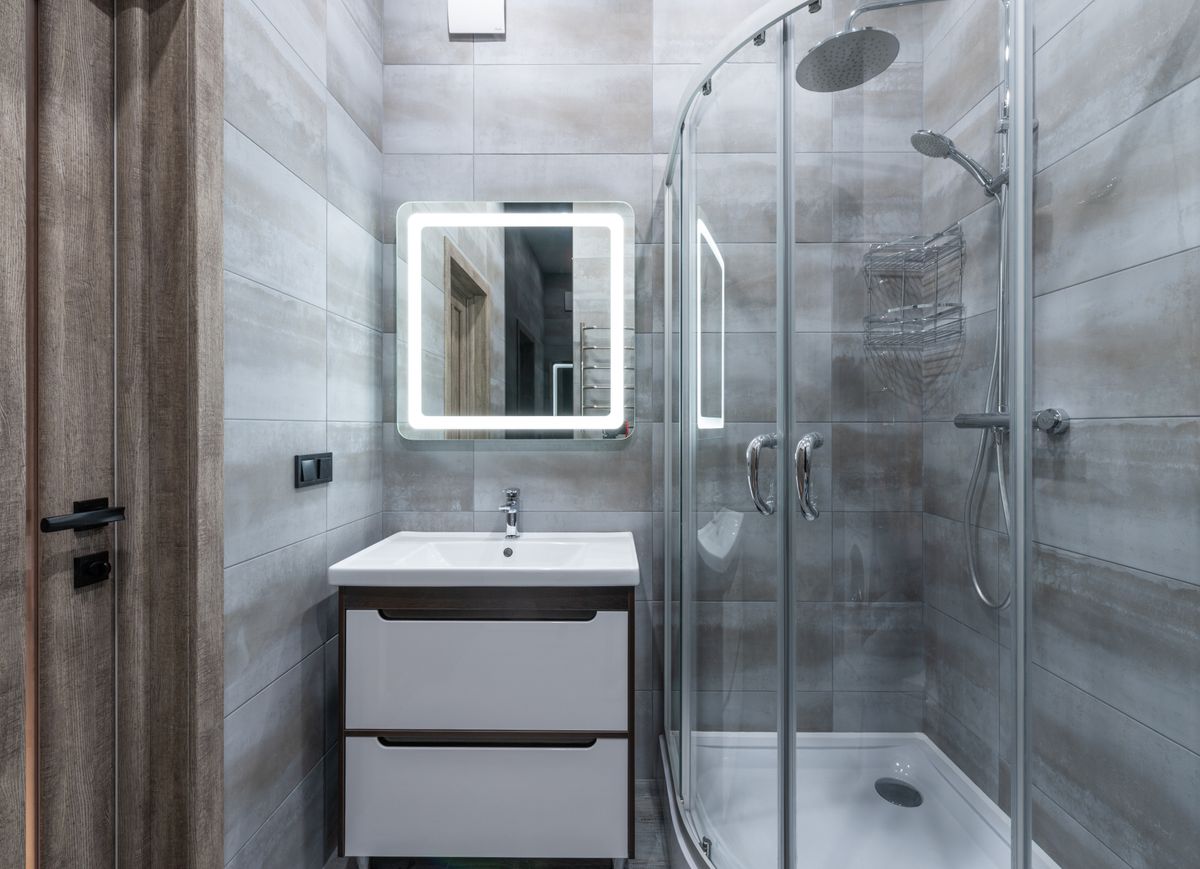
Kitchens get most of the remodeling attention — and most of the budget — but bathrooms are usually the second project homeowners tackle, whether it's a quick powder-room refresh or a full primary-suite renovation. Bathroom projects have their own cost structure, their own resale math, and their own set of places where money quietly disappears. Here's how it actually breaks down.
What a bathroom remodel costs, nationally
Aggregated 2026 cost data from Angi and HomeAdvisor puts most bathroom remodels somewhere between $2,500 for a small cosmetic refresh and $30,000 or more for a full renovation, with a commonly cited national average landing in the low five figures. Because bathrooms are small, per-square-foot pricing runs much higher than kitchens — fixed costs like a toilet, vanity, and shower valve don't shrink much just because the room is 40 square feet instead of 150.
| Remodel tier | Approx. cost per sq ft | What's typically included |
|---|---|---|
| Budget / cosmetic refresh | $80 – $120 | Paint, new fixtures and hardware, re-caulk or re-grout, keep existing layout and tub/shower |
| Mid-range remodel | $180 – $280 | New vanity, tile, toilet, tub-to-shower conversion or updated surround, same footprint |
| Luxury / upscale remodel | $500 – $800+ | Custom cabinetry, natural stone, frameless glass, heated floors, layout changes |
Where the money actually goes
Labor is consistently the single largest expense in a bathroom remodel — commonly cited industry breakdowns put it anywhere from about 40% to 65% of total project cost, often averaging close to half, because bathrooms pack plumbing, electrical, tile-setting, and finish carpentry into a small, awkward space where every trade needs a turn. Materials make up the rest, with cabinetry and hardware typically running around 15-20% of the budget, and plumbing fixtures (faucets, valves) and fixtures like the tub or toilet each accounting for roughly another 15% apiece. Permits typically add a modest amount on top, often cited around 4% of total project cost for work that requires plumbing or electrical permits.
Tile deserves a special mention: it's one of the more labor-intensive line items in the entire project, since a shower surround alone can easily run $600-$1,800 in tile-setting labor before you even count the material cost of the tile itself — and that's separate from any floor tile.
Powder room vs. hall bath vs. primary suite
Absolute dollar cost scales with both size and complexity, not just size alone. A half-bath or powder room is the cheapest bathroom to remodel in total dollars simply because there's no tub or shower to redo, even though its cost per square foot can look high on paper. A secondary hall bath sized for daily family use sits in the middle. A primary/ensuite bathroom is typically the most expensive in absolute terms — it's larger, often includes a soaking tub and separate shower, dual vanities, and more square footage of tile, all of which add up even before you touch finish quality.
Timeline expectations, tier by tier
- Cosmetic refresh — a week or two. Paint, fixtures, and re-grouting move fast since there's no demolition or tile-setting to schedule around.
- Mid-range remodel — 3-6 weeks. Replacing the vanity, tile, and tub/shower surround within the existing footprint is largely gated by tile-setting time and any custom vanity lead times.
- Full primary-suite renovation — 2-3 months or longer. Changing the layout, moving plumbing, or doing structural work takes far longer, especially if it uncovers unexpected issues once walls or floors are opened up — which happens often enough in older homes that it's worth budgeting a contingency for it.
Resale ROI: mid-range beats upscale, again
The pattern here closely mirrors kitchens. According to Zonda's 2025 Cost vs. Value Report, a mid-range bathroom remodel — new vanity and countertop, new tile, an updated tub-to-shower conversion, better lighting, all within the existing footprint — recoups roughly 74-80% of its cost at resale nationally, with the 2025 report placing the mid-range figure near the top of that range, its best showing in years. An upscale bathroom remodel — natural stone, custom cabinetry, a fully reworked layout, premium fixtures — recoups considerably less, roughly 42-50%, because the extra spending outpaces what most buyers will pay back at closing.
If resale value is a real factor in your decision, a well-executed mid-range bathroom is, according to the industry's own data, the more efficient use of your renovation budget than a full luxury gut job. We cover the equivalent math for kitchens in our kitchen remodel ROI breakdown, and the underlying logic — buyers reward a clean, functional update more than an ultra-premium one — holds in both rooms.
How to trim a bathroom budget without cutting corners
- Keep the tub and toilet in their current locations. Just like in a kitchen, relocating plumbing is one of the most expensive changes you can make, since it usually requires new permits and opening up floors or walls.
- Refinish or reglaze an old tub instead of replacing it, if it's structurally sound but just dated or stained — this is a fraction of the cost of a full tub swap.
- Re-grout and re-caulk existing tile before assuming it needs to be torn out; a fresh grout line does a surprising amount to make a bathroom look new.
- Choose a semi-custom or stock vanity over a fully custom built-in — vanity countertops follow the same material trade-offs as kitchen counters (laminate vs. granite vs. quartz vs. marble), which we break down in detail in our countertop materials guide.
- Get multiple itemized bids, the same way you would for a kitchen — pricing for identical bathroom scopes can vary meaningfully between contractors in the same market, a point we cover more fully in our kitchen budgeting guide.
Don't skip these, regardless of tier
A few things are worth protecting on any budget: proper waterproofing (a shower pan or membrane that's installed correctly, not just tiled over), adequate bathroom ventilation to prevent mold and moisture damage, and a contractor who is actually licensed and insured for plumbing and electrical work. A bathroom failure — a leaking shower pan, inadequate ventilation, improperly grounded electrical near water — is far more expensive and disruptive to fix after the fact than it would have cost to do correctly during the remodel.
Budgeting a kitchen remodel too?
Many homeowners plan a bathroom and kitchen update around the same time. Get an instant, itemized kitchen estimate below.
Try the Kitchen Remodel CalculatorBathrooms are small, but they're not simple — the plumbing, electrical, and waterproofing packed into that footprint is why labor dominates the budget more than it does in almost any other room of the house. Scoping the project to a tier you're comfortable with, protecting the parts that prevent water damage down the road, and getting real itemized bids will get you further than chasing the cheapest quote for the same scope of work.
Bottom line
A mid-range bathroom remodel — new vanity, tile, and tub/shower surround within the existing footprint — is both the most common project scope and, according to Zonda's own resale data, the more financially efficient one compared to a full upscale gut renovation. Scope your bathroom project to that tier unless you have a specific reason to go further, and protect the waterproofing and ventilation details regardless of budget.