How this bathroom vanity cost calculator works
Most vanity pricing pages give you one scary-wide range and leave you to guess where you fall in it. This calculator takes a different approach: it breaks a vanity project into the pieces that actually make up the bill (the cabinet, the countertop, the faucet and hardware, installation labor, and two optional extras) and shows a low-high range for each. That way you can see which decision is driving your total and which ones barely matter.
The numbers come from the same model as our Bathroom Remodel Cost Calculator. Your vanity size maps to the bathroom-size categories used there (a compact vanity to a small bathroom, a standard single to a medium bathroom, a double to a large primary bath), your remodel level sets the baseline per-square-foot rates, and the cabinet, countertop, and faucet choices apply the same tier adjustments shown below.
| Choice | Option | Adjustment vs. the middle option |
|---|---|---|
| Cabinet tier | Stock / Semi-Custom / Custom | −25% / baseline / +40% |
| Countertop | Laminate / Granite / Quartz / Marble | −35% / baseline / +15% / +45% |
| Faucet & hardware | Basic / Mid-Range / Premium | −30% / baseline / +45% |
How to size a bathroom vanity
Size is the first decision because it limits every other one. Vanities are commonly sold in widths from roughly 24 inches up to 72 inches or more, with depths often in the range of 18 to 22 inches and heights that run from traditional to taller “comfort height” models. Before you fall for a style, measure the room the way an installer would:
- Measure the wall, not the old vanity. Record the full wall-to-wall width where the vanity will sit, then subtract any trim, baseboard, or tile that projects into the space.
- Check door and drawer swing. A deep vanity can block a door, a toilet, or a tub apron. Open every door and drawer in your mind (or with a cardboard mock-up) before you order.
- Locate the plumbing. Note where the drain and supply lines come out of the wall. A vanity that centers its sink on the existing drain is far cheaper to install than one that forces new pipe runs.
- Look at clearances around the sink and toilet. Building codes set minimum clearances for fixtures, and they vary by city and county. Ask your plumber or local building department rather than relying on a rule of thumb.
- Plan the mirror, lights, and outlets. A wider vanity may need a wider mirror and a different light position, which can mean electrical work that is not part of this estimate.
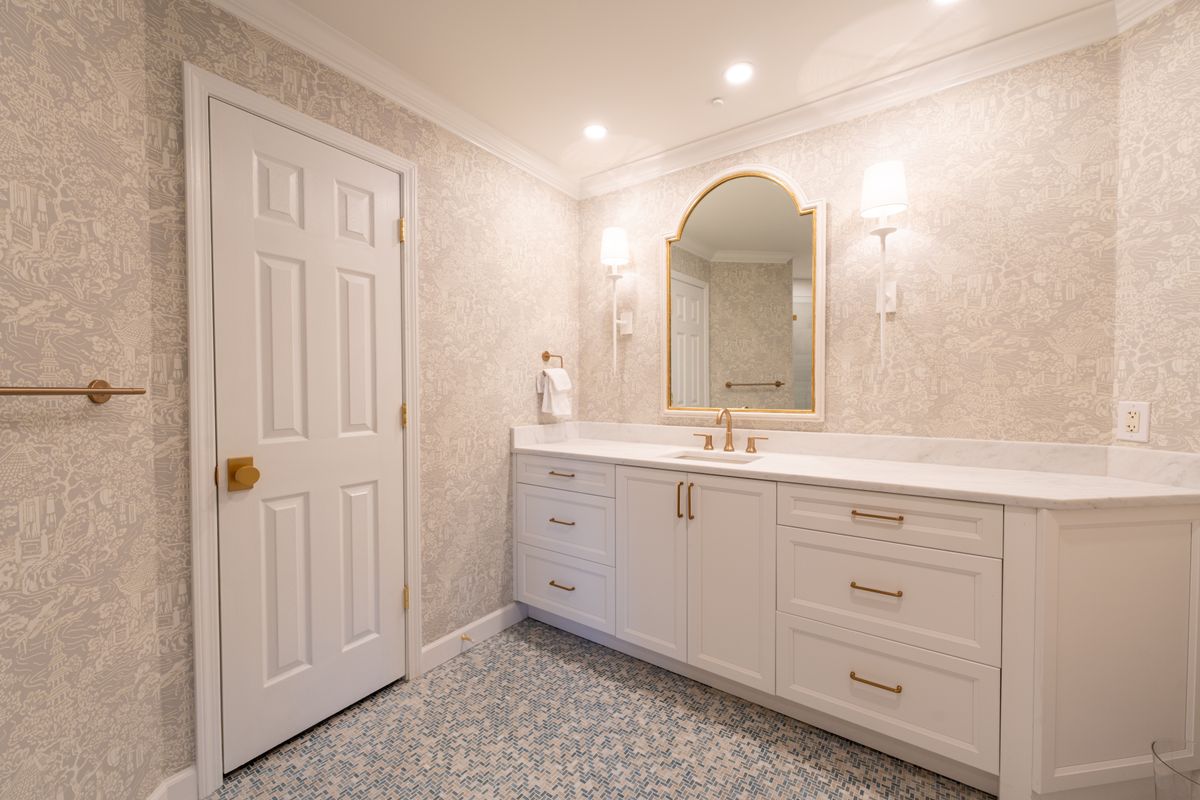
Single vs. double vanity: which is worth it?
A double vanity is one of the most requested primary-bath features, but it is not automatically the right call. It earns its cost when two people regularly get ready at the same time and the wall is wide enough that each sink has real elbow room and counter space. When the wall is borderline, two cramped sinks are worse than one generous one. A single vanity with a wider top and a full bank of drawers often feels bigger and stores more.
Budget-wise, going double touches nearly every line of the estimate: more cabinet, more countertop, a second faucet, and more plumbing work. If you have the width but not the budget, a long single-sink vanity with the sink offset to one side can give you a lot of the usable counter area for less. It is also worth asking a local real estate agent whether double sinks are expected in primary suites where you live, since buyer expectations vary by market. Our guide to kitchen versus bathroom remodel value covers how buyers tend to weigh these upgrades.
Vanity cabinet tiers: stock, semi-custom, and custom
The same three cabinet tiers you see in kitchens apply to bathroom vanities. Stock vanities come in standard widths and finishes and are usually available quickly, which makes them a strong fit for standard-size bathrooms and tighter budgets. Semi-custom vanities start from a manufacturer’s line but let you adjust sizes, finishes, and storage configuration, which helps when your wall is not a standard width or you want specific drawer layouts. Custom vanities are built for your exact space and design and make the most sense for unusual layouts, built-in looks, or a specific material you cannot get elsewhere.
Beyond price, ask about construction. Plywood boxes tend to handle bathroom humidity better than particleboard, and sealed edges, solid drawer construction, and quality hinges and slides matter more in a room that gets steam every day. Lead times also differ by tier, and custom orders can take months. Our detailed stock vs. semi-custom vs. custom cabinets guide walks through construction, lead times, and hidden costs at each tier.
Choosing a vanity countertop material
The countertop is the surface that takes the most abuse in a vanity: water, toothpaste, hair products, and cosmetics. The four materials in the calculator trade off cost, durability, and upkeep in different ways:
- Laminate is the budget-friendly choice. It needs no sealing and cleans easily, but it is more vulnerable to heat and to chipping at edges and seams.
- Granite is natural stone with good durability and a wide range of patterns. It is porous, so it needs periodic sealing to resist staining.
- Quartz is engineered and non-porous, so it does not need sealing and resists staining well, which makes it popular for bathrooms. Extreme, sustained heat can damage it.
- Marble offers the most luxurious look but is softer, stains more easily, and can etch from acidic products. Many homeowners choose it for a low-use powder room and use something more durable in a busy bath.
Many stock and semi-custom vanities are sold as a package with a top and sink already included, which can simplify pricing. If you buy the cabinet and top separately, you will also pay for fabrication, a sink cutout, and installation. For a deeper comparison of these four materials, including laminate vs. granite, read our countertop materials guide.
Faucets and hardware
Faucets look like a small line item, but the tier you choose affects both the price and the plumbing. A basic single-hole faucet is the simplest to install. Widespread and wall-mounted faucets need specific hole patterns or in-wall plumbing, so check that your countertop is drilled for the faucet you want before the top is fabricated. Cabinet pulls and knobs are easy to upgrade later, but soft-close hinges and full-extension drawer slides are far better to get right at purchase. Finish matters too: matching your faucet, towel bars, and lighting avoids a mismatched look at modest cost.
What drives vanity installation cost
Swapping a vanity in the same spot is one of the more straightforward bathroom jobs, and some homeowners take on parts of it themselves. Our guide to DIY vs. hiring a contractor (written for kitchens, but the same logic applies) explains where DIY savings are realistic and where licensed trades matter, especially plumbing. A few factors can change the labor line quickly:
- Plumbing location. Keeping the drain and supply lines where they are keeps labor down. Moving the sink to another wall, or changing a single sink to a double, often means opening the wall or floor and running new lines, and it may require a permit.
- Age and condition of existing plumbing. Old shutoff valves, corroded supply lines, and non-standard drains are common in older homes and are often replaced while the vanity is out.
- Wall and floor condition. Uneven walls, damaged drywall, or a floor that was never finished behind the old vanity add patching and carpentry time that this estimate does not cover.
- Countertop fabrication. Stone and quartz tops are templated and cut to size, which takes time and is usually where lead time and cost surprises appear. Edge profiles and extra cutouts add to the price.
- Removal and disposal. Taking out and hauling away the old cabinet and top is a real labor task, especially with heavy stone, which is why it is a separate option in the calculator.
- Local labor rates. The state selector applies a regional adjustment, but your actual contractor’s rate, schedule, and minimum job charges can move the total.
Common bathroom vanity mistakes to avoid
- Buying before measuring the plumbing. A vanity whose back panel or drawers collide with the drain or supply lines needs cut-outs or a custom solution.
- Choosing the countertop for looks only. A porous or soft surface in a high-moisture room needs more upkeep than most people expect.
- Forgetting the faucet hole pattern. A faucet that does not match the drilled holes forces a new top or an awkward adapter.
- Skipping a contingency. Industry budgeting guidance commonly suggests an extra 10-20% for surprises such as water damage behind the old vanity.
- Ignoring lead times. Custom cabinets and stone tops can take weeks or months, so order early and avoid demolishing the old vanity until the new one is on site.
- Overspending relative to the rest of the room. A premium vanity in an otherwise cosmetic refresh can look out of balance, and it rarely pays back dollar for dollar at resale.
- Comparing quotes that are not like for like. Ask every bidder to itemize the cabinet, top, faucet, installation, and removal separately.
Where the vanity fits in your whole bathroom budget
The vanity and countertop are one slice of a bathroom remodel, alongside the shower or tub, tile, plumbing fixtures, and labor. If you are deciding how much to put into the vanity compared with everything else, run both calculators with the same remodel level so the numbers line up, and read our bathroom remodel cost breakdown for how costs and resale returns tend to scale by project scope. If you are also thinking about the kitchen, the same cabinet and countertop trade-offs appear in our kitchen remodel cost calculator and in our tips for saving money on a remodel.