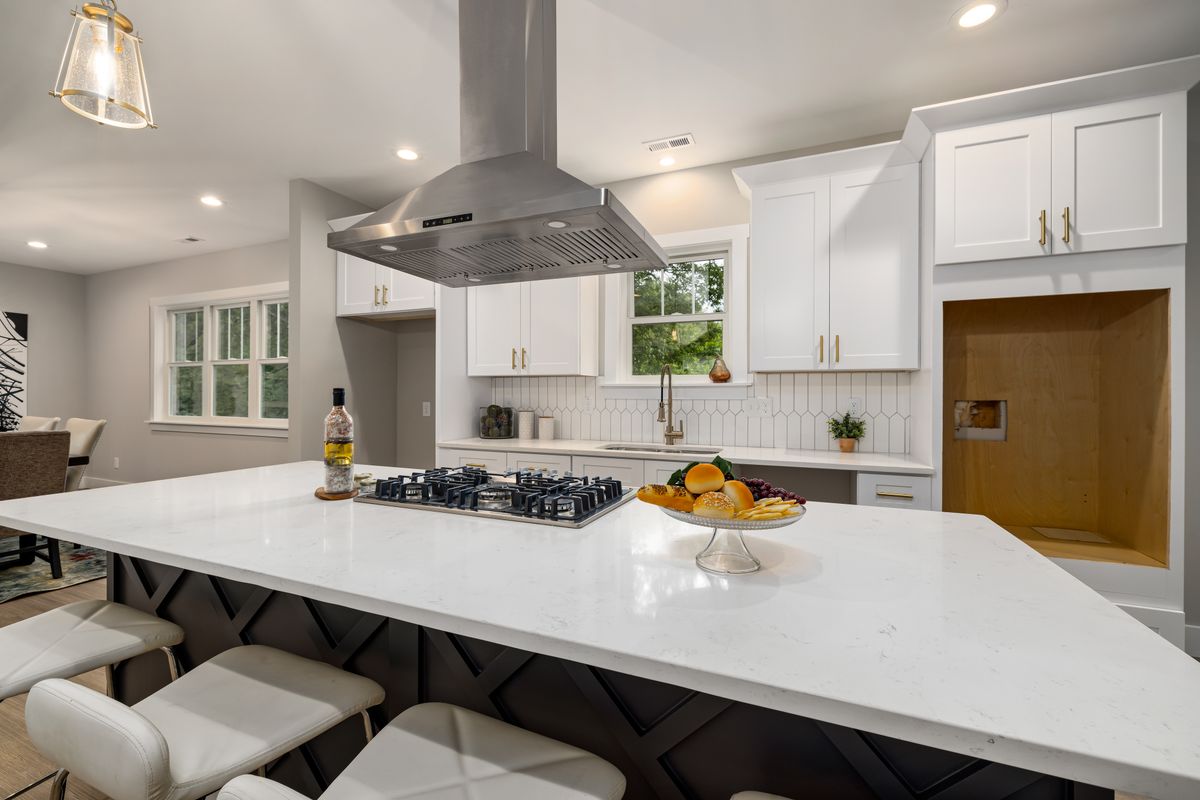
The average kitchen remodel isn't cheap, and it's easy to watch a budget balloon from a reasonable number to a scary one over the course of a few contractor meetings. But the projects that stay on budget usually aren't the ones that used the cheapest materials everywhere — they're the ones that were strategic about where to spend and where to hold the line. Here's how to actually do that.
Start with where the money goes
Before you can cut a budget intelligently, it helps to know what you're cutting. Across published industry cost breakdowns, a typical full kitchen remodel budget splits out roughly like this: cabinets take the largest share, at around a third of the total; labor typically runs about a quarter; appliances land around 15-20%; countertops around 10-15%; and flooring usually comes in under 10%. The remaining slice covers plumbing, electrical, permits, and design.
That means the two biggest levers in almost any kitchen budget are cabinets and labor — which is exactly where the advice below is concentrated. For a closer look at the labor side, see our kitchen remodel labor cost guide, and for a small-kitchen benchmark, our 10x10 kitchen remodel cost guide.
Keep your existing layout
This is, by a wide margin, the single most effective way to control a remodel budget. If your sink, range, refrigerator, and major electrical circuits stay where they already are, you avoid new permits for plumbing and electrical relocation, you avoid opening walls and floors to run new lines, and you avoid the drywall, flooring, and patching that follows. Moving even one plumbing fixture a few feet can add thousands of dollars once you account for the labor, inspection, and repair work involved.
If you're drawn to an island or a different work-triangle, ask your contractor or designer whether it's achievable within the existing plumbing and electrical footprint before you assume it requires a full layout change.
Reface or repaint before you replace
Full cabinet replacement is the most expensive single category in most remodels. Cabinet refacing — keeping your existing cabinet boxes and replacing only the doors, drawer fronts, and hardware — changes almost everything you visually notice about a kitchen for a fraction of full replacement cost, provided your existing boxes are structurally sound and you're happy with the current layout. Our cabinet refacing cost calculator compares refacing with replacing for your kitchen size and cabinet tier.
If your boxes are older, painting them (professionally, with proper prep and a durable finish) is another middle-ground option that costs far less than replacement while still meaningfully changing the room.
| Cost-saving move | Where it saves | Trade-off to know |
|---|---|---|
| Keep the existing layout | Plumbing, electrical, permits | Limits island/repositioning options |
| Reface instead of replace cabinets | Cabinets (the largest budget line) | Only works if boxes are structurally sound |
| Choose semi-custom over custom cabinets | Cabinets | Fewer size/finish combinations |
| Quartz or laminate instead of marble | Countertops | Marble's veining look isn't fully replicated |
| Keep working appliances | Appliances | Mismatched finishes possible |
| Get 3+ itemized contractor bids | Labor | Takes more time upfront |
Pick a cabinet tier deliberately
Custom cabinetry is beautiful, but semi-custom lines now offer a huge range of sizes, finishes, and storage inserts at a meaningfully lower price point and shorter lead time. Unless you have an unusual layout or a specific finish you can't get any other way, semi-custom is where most remodels land — see our full cabinet tier comparison for the details on what each level actually includes.
Be strategic about countertops
Natural marble is gorgeous but soft, porous, and expensive, both in material and in the sealing and care it needs afterward. Quartz gives you a similar high-end look with better day-to-day durability and, in many markets, a lower price than marble. If budget is tight, laminate has improved enormously and can be a reasonable placeholder, especially in a kitchen you don't plan to stay in for decades. Compare all four materials in our countertop guide.
Don't replace what still works
It's tempting to swap every appliance for a matching new suite, but if your refrigerator or dishwasher is only a few years old and functions well, keeping it is one of the easiest ways to free up budget for cabinets or countertops instead. A mismatched finish is a much smaller problem than a mismatched budget.
Get real, itemized bids — and get at least three
Pricing for the same scope of work can vary substantially between contractors in the same market. Getting three or more written, itemized bids (not verbal ballparks) lets you compare apples to apples, spot what's included or excluded, and negotiate from an informed position. Ask each contractor to break out labor, materials, and any allowances separately.
Time it, if you can
Contractor availability and material lead times both shift seasonally in many markets, with late fall and winter sometimes offering more scheduling flexibility and occasional pricing softness compared to peak spring/summer remodeling season. This varies by region, so ask local contractors directly about their slow season rather than assuming a national pattern applies to you.
Know what to leave to the professionals
Demolition, painting, and simple hardware swaps are reasonable DIY targets for a comfortable homeowner. Plumbing, gas line work, electrical, and structural changes are not places to cut corners — mistakes there are expensive to fix and can create real safety and insurance issues. Save your DIY energy for the tasks that are genuinely low-risk. We break down exactly which tasks are worth DIYing and which aren't, plus what DIY actually saves once your time is factored in, in our DIY vs. general contractor guide.
Where not to cut corners
Saving money is about being strategic, not indiscriminate. A few areas are worth protecting even on a tight budget: proper waterproofing behind a sink and around a dishwasher, adequate ventilation for a range hood, correctly rated electrical circuits for major appliances, and a contractor who's actually licensed and insured for the work being performed. Cutting corners in these areas doesn't just risk a worse-looking kitchen — it risks water damage, mold, electrical hazards, or a project that can't pass inspection and has to be redone, which costs far more than doing it correctly the first time.
A simple sequencing tip that saves real money
Decide on your layout and any structural, plumbing, or electrical changes first, and get those finalized before you start shopping for cabinets, countertops, and finishes. Changing your mind about the layout after cabinets are ordered, or after countertop templates are cut, is one of the most common sources of expensive change orders and wasted material. A little extra time in the planning phase — confirming measurements, appliance dimensions, and exactly where plumbing and electrical will land — routinely pays for itself by avoiding costly mid-project changes.
See what your own remodel might cost
Plug in your kitchen size, remodel level, and material choices to get an instant, itemized estimate.
Try the Kitchen Remodel CalculatorNone of these moves require a "cheap" kitchen — they're about spending deliberately on what you'll actually notice every day (cabinets, countertops, a layout that works) and being efficient about what you won't (moving plumbing you didn't need to move, replacing appliances that already worked fine).
Bottom line
A budget-conscious kitchen remodel and a "cheap-looking" kitchen remodel are not the same thing. The homeowners who end up happiest with the result tend to be the ones who protected the decisions that show up every single day — a layout that works, cabinets and a countertop they actually like — while being efficient about the decisions that mostly just cost money without adding much visible value, like moving plumbing that didn't need to move or replacing an appliance that was already working fine. Run your own numbers through the calculator below, then take those figures into your first contractor conversation already knowing roughly what a realistic budget looks like for your size, tier, and materials.